Thursday, April 9, 2009

Melting Snow Spits Out Treasures

by Sarah Smiley, www.SarahSmiley.com

The snow here in Maine is melting. (Note to Floridian Snowbirds: It's safe to come back now!) There is only one small mound of packed snow behind the garage and one next to the front sidewalk, where previously, for the past three months, there was a 4-foot wall of snow. We affectionately referred to this as the "Wall-O-Snow." 

With a snowblower and shovel, Dustin and I in December cleared a path through the Wall from the driveway to the front door. When the boys walked through it, they couldn't see above the snow. It was like they were going through a corn maze. Sometimes my middle son, Owen, 6, would be afraid. Other times, he and Ford, 8, pretended the maze of shoveled snow was some kind of spaceship in Star Wars.

But now, sadly (surprisingly) the Wall is gone, and as the levels recede in our backyard, I'm discovering a virtual time capsule of lost toys, shovels and gloves. One by one, the forgotten items are unearthed as the snow melts away. Like counting the rings or a tree to determine its age, the layers of snow represent the preceding months and weeks. The top layer, which fell in January and February, reveals lost winter equipment such as blocks used to make snow forts. The bottom layer of snow contains even longer forgotten summer items like toy trucks, a sand shovel, and Ford's baseball glove. It was the discovery of the baseball glove that was most poignant for me.

With the departure of winter comes the arrival of one of my favorite times of the year: Little League season. Maybe this is why God gave me only boys. If I didn't love the smell of red baseball dirt and the way it tints a new pair of white tennis shoes, and if I didn't love the sound of a baseball when it hits the bat or the feel of splintered bleachers, I'd be in a very sorry state as the mother of three boys. As it turns out, watching my boys play baseball seems the perfect way to spend an afternoon. When I saw that the baseball park several streets over from our house is finally visible again for the first time since December, I knew that although we had our fun in the snow, we have more fun ahead of us at the fields.

Of course, being a mom in the bleachers isn't always easy. In fact, it's usually bittersweet. It takes a tremendous amount of "letting it go" to watch your child, possibly the one who is still afraid of the dark or likes his waffles cut up and with syrup on the side for dipping, step onto the field -- or worse, disappear into the dugout -- with a team of peers who may or may not taunt him for getting the first out or not making it to third base. It is from the bleachers of Little League games that most mothers see the first glimmer of their boys becoming men. You know that he will likely cry into his arm in the car on the way home because he didn't hit the ball, but for now, he rushes to the dugout with his friends and throws his fist at the air in a very cool, darn-I-should-have-gotten-that-one sort of way. You see him suck in his breath and set his chin in a determined point when the coach tells him to run faster, even as you know this is the same boy who wants one more bedtime story and one more hug before going to bed at night.

I suppose the emotional torture, if you will, of mothers at baseball is due to the fact that despite it being a team sport, your child is often singled out with all eyes on him as he goes up to bat. Sometimes I can hardly watch. My heart pounds. And not because I want my sons to be good, but because I want them to FEEL good. There have been many times that I was tempted to scale the chain-link fence, grab my child and tell him, "it's OK, Honey, Mommy is very proud of you!" This sort of behavior, of course, has been strongly discouraged by my husband, Dustin, who intuitively knows that babies become boys and boys become men on the baseball diamond. Doting mothers have no place in the process.

Yesterday, I picked up Ford's lost baseball glove, the one that the Wall-O-Snow spit out in its purge. The glove was right beside a toy airplane that had made him cry because it didn't work. I smiled, even as my heart slightly ached, to think about another upcoming season sitting in the stands, helplessly watching the slow unraveling of my boys' childhood, and, like the snow falling away to reveal hidden treasures, seeing glimpses of who they are to become.

Tuesday, April 7, 2009

You Tell Me: Did you know when you wanted to be a writer?

by Karen Harrington
author, Janeology

--

There are two questions writers hear ALL the time:

1/ Wouldn't it be great if we wrote a book together?
2/ Did you always know you wanted to be a writer?

I've spent a little time thinking about these questions and here's what I've come up with.

No.

Now, don't think I'm rude. I think it's the nature of most writers to be solitary about their work. Though I didn't always know I wanted to write - I have always known I liked to be solitary so I could look at things, imagine things, collect interesting details, make up dialogue of what people would say - or should say. And it seems to me that this sense of being alone to create happened around the age of 12.

Picture a girl standing on a dead, four foot tall tree stump in her front yard, looking out over the rooftops in her own blue-collar neighborhood. That’s me, around age twelve. I climbed this stump at night and looked at the houses and what I thought was a busy road just beyond our neighborhood. I stood up there until the stump finally gave out one night as I leapt off. But before that, it was my pedestal for a full summer. Spying on the neighborhood and the roads, I had all kinds of ideas about where everyone was driving. For example, maybe they were driving all the way to faraway Dallas!

I saw families through their windows and conjured up what was being said and eaten inside, which was decidedly more interesting and flavorful than what took place in my house, I tell you. No Hamburger Helper over there. I heard arguments and screeching car tires coming from the nearby apartments and instead of being afraid, I romanticized a lovers’ quarrel. Of course it was romantic, I reasoned, because the very next sound coming from the apartments was someone playing a piano.

My siblings thought I was a big dork for standing out there like a flagpole. They threatened to pelt me with basketballs. This threat was carried out on more than one occasion. And I can’t imagine what my single-dad must have thought. Did he look out the window and shake his head and tell himself that it could have been worse? Did he rationalize that it was better than worrying about drugs or that boy down the street who I dated for ten years against my Dad’s advice. (Sorry Dad. He had a blue Camaro that matched his eyes.)

Wouldn’t I love to go back in time and talk to my younger self? I think I know all the reasons I wanted to stand there. I was beginning to understand there was more than one way to look at the world – one that I could make up, that I could make better with the right adjectives and dialogue. Maybe I was beginning to understand that if you have an unexplainable yearning to see something different, you could start by viewing the world from a different perspective. And if all you have is four feet of dead tree to prop you up and everyone thinks you’re a big dork, well, do it anyway.

All these years later, I’ve found that sitting in my front yard and letting my imagination go is good for the soul. (Just don’t expect the blue-eyed boy to actually SAY the dialogue you’ve made up for him. You’ll be disappointed when he screws it up and just burps.)

What about you? Do you recall when you first started getting an idea about what you were going to be or create?


--

Karen Harrington is the author of the novel Janeology - The story of one man's quest to understand his wife Jane's inexplicable descent into mental illness. Visit her at http://www.karenharringtonbooks.com/ or at her blog http://www.scobberlotch.blogspot.com/

Monday, April 6, 2009


Watching for Birds
By Augusta Scattergood


Lately, I’ve been thinking alot about birds. And not merely as a diversion from writing, though as a time waster, it’s a good one. In Florida we are surrounded by new-to-me birds. Not just your ocean-variety gulls. But all manner of water birds, and even an escaped band of very loud green parakeets that flock to a neighborhood tree. Birds are best when observed soaring in the clouds like the hawks from my friend Lee’s living room window in Austin, Texas. Or diving for fish like the pelicans congregating on the piers near our house.

But sometimes, you can’t resist the stories birds tell. Or at least, telling a bird story or two.

We were living in New Jersey, in a quiet borough (yes, they actually call little towns “boroughs” there), and it was late and dark. When I looked down from my upstairs bedroom window, I saw a police car in front of my neighbor’s house, lights flashing.

This was worrisome. She had three little babies and a husband who worked late hours in Manhattan. So my husband and I did the neighborly thing. We rushed right over to see if we could help.

Before we even knocked on their door—it was way too late for a doorbell’s buzz—two local policemen paraded out of the front door hauling a huge dog crate between them, balanced on two broomsticks. Although my neighbor had a big, friendly Lab, there was no dog inside this crate. Instead, a very fierce, very angry wild turkey attempted to claw his way out of his prison, all the way down the sidewalk. Carried by two borough policemen.

In a little town a mere train ride away from New York, a wild turkey had managed to bust into a suburban kitchen when the dog went out of the door. And frighten my poor neighbor enough to call 911. The damage done to the kitchen cabinets by Mr. Turkey was extensive. When another neighbor showed up the next morning with a bottle of Wild Turkey, the victim was not amused.

Why am I remembering this story? I now live on a canal in central Florida where I frequently watch birds to pass an afternoon not writing. Although I hope to work an anhinga or a diving pelican into an essay or story soon, so far it’s not happening. But yesterday a great blue heron stood two feet from my back door—always open to the breezes—and he stared at us.
A heron has a large, sharp beak. My heart sped up and for a moment I was tempted to reach for the phone and dial 911 before I remembered: He is not a wild turkey. He is not about to peck my kitchen cabinets to pieces. Then the heron flew his graceful flight across the canal, to the safety of the sea grapes.

And I tried to take it all in. To look at that bird standing petting-distance away. To look at it like a writer.

Kate DiCamillo began one of my favorite books, Because of Winn-Dixie, her award-winning children’s novel, inside a grocery store. When writing about what it takes to be a writer, she says we need to learn how to look:

The world, under the microscope of your attention, opens up like a beautiful, strange flower and gives itself back to you in ways you could never imagine.

I’m working hard on learning how to see things like a writer, to notice details and wonder about the story. As long as it’s herons at my back door or hawks soaring outside my friend's window-- and not wild turkeys forcing their way into my kitchen-- I’ll watch and wonder, giving them my full attention, till they fly away.


Augusta Scattergood is a freelance writer and book reviewer who, from her early college days, has been a rabid Carolina Tarheels basketball fan. Visit her blog at http://ascattergood.blogspot.com/

A Southern Family Funeral

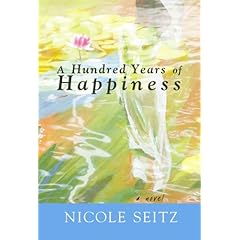
by Nicole Seitz, author of A Hundred Years of Happiness, Trouble the Water, and The Spirit of Sweetgrass

I just got back from a family funeral in North Carolina. I'm a bit speechless today but maybe the words will come...

Men in black morning has broken holy, holy, holy, photographs of my grandmother propped up in the church foyer shaking hands hugging relatives puffy eyes salty tears waterproof mascara children in Easter finest smiles on faces casket in front covered in red roses she has gone on to be in the presence of the Lord crying crying children staring wondering why the sudden severity.

Sun is shining azaleas blooming sky so blue drive to the cemetery windy roads flat stones green tent children running wind blowing seats for the weary a final goodbye.

Relatives with years between us catered lunch macaroni and cheese sweet tea banana pudding round tables decaf coffee Styrofoam cups my grandmother's stuffed animals up for grabs the children are happy swing from a tree by the river cool breezes love these people pieces of me been too long table of photos and letters we've never seen eyes mesmerized wasn't she beautiful?

A virtuous woman pillar of our family Godly woman gone to heaven
we remain
remember her pretty smile
mashed eggs vegetable soup firm warnings fervent prayers
day is done no more sickness
gone first class to be with Jesus
listen.
she's calling us home.

------------------------------------------------
Nicole Seitz is the author of three novels published by Thomas Nelson: A Hundred Years of Happiness, Trouble the Water (chosen as one of the Best Books of 2008 by Library Journal), and The Spirit of Sweetgrass. She writes tales that weave together life and death, visible and invisible, heaven and earth and everything inbetween. She also paints the covers of her novels.

Nicole's latest book, A Hundred Years of Happiness, releases in Large Print Hardcover this week from Center Point. Booklist calls it: "A heartbreaking tale that sheds light on love, friendship, and faith powerful enough to endure the atrocities of war." Fresh Fiction says: "This will be a beautiful story remembered for years to come. "
Now how 'bout, be sweet and go buy someone you love a copy?

Nicole lives in the Charleston, SC area with her husband and two children and is busy working on her next book.

Friday, April 3, 2009


Author Spotlight: Katherine Center author of Everyone Is Beautiful

Texas author Katherine Center has written a funny, wise novel about what happens after happily ever after. Lanie Coates is a harried wife and mother of three boys under four and she’s feeling a little stressed moving from Houston to Boston so that her husband can attend graduate school.

When a mom at the playground insults Lanie in one of the worst ways possible (read the very charming excerpt to find out how), the young mom decides she’s been neglecting her own needs, and makes some big changes in her life. Unfortunately her actions start to threaten her marriage.

If you’re a fan of women’s fiction, Everyone is Beautiful is a witty, big-hearted novel you won’t want to miss.

What’s the inspiration behind Everyone is Beautiful? Also how did the title come about?

I knew from the very beginning that I wanted to write about a mom whose body had kind of run away with her. Most moms I know feel a little bit that way. I always feel like women should be kinder to themselves, and it came to me early on, as well. And the title just came to me in that magical way things sometimes do. The whole time I was writing, I hoped the book would live up to its title.

There are some hysterical kid shenanigans in the novel—one occurring at a dinner party. You have young children. Do you frequently draw from real life?

Absolutely. The things those kids do are not the exact things my own kids do. But they're pretty similar. Kids are so funny, because they really don't know the rules of society. And they don't care. They do any crazy thing that occurs to them. And they have no self-consciousness about it. I remember one time we got a sideboard for our dining room that had a little cabinet door in it. And while we were admiring it, my 3 year old son just crawled inside. Like, one minute, he was standing next to it, and the next minute, he was inside. My husband and I were cracking up, and he had no idea why. But we realized in that moment that he evaluates everything he sees with the question: "Could I fit in that?"

Speaking of kids, how do you balance motherhood and writing?

It's not easy! They are both essential parts of my life, and they are both very time consuming--so they do fight for my time sometimes. I try to do all my writing when my kids are at school sleeping. Most of the time that works out pretty well! Though there is a tension between the two parts of my life, I actually think, on a good day, that tension is good for me. Getting to have both energizes both the writing and the parenting!

You’re a novelist with a distinctive voice. How did you develop it?

I kept journals for a long time--starting in sixth grade and going all the way through college. I think, more than anything, all that journal-keeping honed my writing voice. After a while, the journals just started to sound like me. I just kind of figured out how to sound like myself on paper. And even though the narrators of the book are not me, they do often sound like me--the same sense of humor, the same way of talking.

What’s next for you?

I've just finished my third novel, which will come out next year, and I'm about to start on a fourth. I'm also blogging and twittering a lot!

Everyone is Beautiful is your second novel. What are a few things you’ve learned as an author since your debut novel?

The timing and pacing and shaping of a long story, which is something I think you can only learn by doing. I have a much better sense now of how the little ups and downs in a story create the shape of the whole.
CONTEST: Want to win a copy of Everything is Beautiful? Comment on any blog this upcoming week. Include the blog entry you commented on and send an email to nechespublicity@knology.net. Winner announced on Saturday, April 11.

Wednesday, April 1, 2009

by Zachary Steele

Good day, and happy post-April Fools day to you all. I hope you survived the day, and that you are not scrambling about trying to figure out how to stop Johnny and Jane from taking that job offer they suddenly got yesterday that would require them to move to Canada and become fruitcakes. Aside from Facebook deciding that I, along with most of the world, was a distant cousin of Barack Obama, I managed to survive the day unscathed and without any unpleasant and unecessary attempts to "fool" me. Not that I am opposed to a good prank, mind you, or even a well-crafted tall tale. I love them. I just feel like I've walked into a cheap, $2 wine in a paper cup kind of comedy club when the whole word suddenly feels they have a joke to tell, or a prank to pull, simply because it's April 1st.

Hm. I think I just aged to, like, 74 or something there. I'm going to start shaking my fist before long. Tell you to get off my yard...or blog, or whatever. Bleh.

Anyway, for those who do not know me, I am Zachary Steele, author of Anointed: The Passion of Timmy Christ, CEO, which debuted in March, and has thus far gotten some traction, as well as a nice review in Publishers Weekly. The Tacoma Public Library system has me categorized under, "devil fiction". That. Is. Awesome. I have a blog, should you find the need for a good dose of humor, and I'm slowly getting addicted to Twitter, and have an account for one of my characters, as well as myself. Thanks to Russ Marshalek and his emo-maniacal obsession with all things interwebbie, I've become hopelessly enamored with social media. It takes the days of sitting around waiting for a book to sell and slams it over the head with a Kindle. And it offers the reader far more outlets to hear your voice, and at no cost! Sweet!


It's an amazing time, actually. There are now more outlets to reach the public than ever before, with more materializing by the moment. Even Second Life has turned role-playing games into a source of income, much though it may also sap your "real life" away in exchange. Despite the fact that many people have come to use this resource as an alternate means to a rather dreary day (read in: socially awkward man/woman seeks socially awkward woman/man with which to chat, in a dark room, separated by a thousand miles or more, about nonsensical things that we can pretend to be excited about because, hey, life sucks right?), I do know of a few musicians and creative minds who have made a few bucks off it. And, dude, you can totally fly! Can you do that in real life? No. But I can talk to women.

Stephanie Meyer does not have an avatar in Second Life. Instead, she has a so-so, mostly poorly written young adult series about vampires, and werewolves, and teen angst. And she has a few millions more dollars than I. I'm not a fan of the series, simply because it's a bit too Gossip Girl for my taste, but I was just itching for March 21st to roll around, when the DVD would be released, and sentient beings like myself could run to the video store to rent this horrific piece of cinematic trash, so that it could be viewed in the sanctity and solitude of home, and with a considerable amount of alcohol to numb the senses. My wife, Alice, and I tried to concoct a drinking game, but it just seemed unlikely that we could manage to not be drunk 20 minutes into the movie. This thing is 2 hours long. 2 hours! So as not to pass out before the first hour was, Eclipsed (ooh, bad you!), we just downed some Kahlua and started the movie. I would like to summarize for you.

(ahem)

And I was, like, "yeah", and he was all, "Whoa", and I was, like, "I know", and he was, "You're not afraid?", and I was, like, "You're a vampire. I love you." The End.

2 hours?

It was worth it though. I highly recommend it, if you're in need of horrible acting, terrible dialogue, poor direction, and a hokey Stephanie Meyer cameo. Just know that it's a commitment. Like baking bread. You made the dough, so you gotta let it rise, right? And you can't very well go through all that trouble and not bake it, can you? And, holy cow, it's all warm and chewy, and it's just calling for butter, so you gotta eat a piece or 6, don't you? True, you're fat now, and there's some guilt, but Oh. My God. You feel so much better for it, and you can't wait to do it again. Yeah, that's Twilight for you.

For the record, we watched it twice. I'm counting down the days until New Moon is out on DVD.


Too Many Words (Or Not a Lot)

By Sarah R. Shaber


Are you familiar with this anecdote about Mozart and Emperor Joseph II of Austria? Apparently the monarch thought the young composer’s newest work was a bit complex and lengthy. Mozart was devastated by his criticism. Joseph II consoled him. “My dear young man, “ he said, “don't take it too hard. Your work is ingenious. It's quality work. And there are simply too many notes, that's all. Just cut a few and it will be perfect.” And Mozart replied, “which few did you have in mind, Majesty?”

Length is a perennial topic for writers. You’ve heard all the cliches. No one will publish a first novel over 350 pages in manuscript. Best sellers are always 100,000 words or more. Genre novels should never be more than 60,000 words. Christmas books must be novellas, no more than 40,000 words. What, people are too wiped out from eating and gifting to read a regular book? Oh, and computers have made it too easy to write very long books, tormenting editors and readers alike. Come on, folks, Tolstoy wrote War and Peace—the English translation is over 560,000 words—in longhand!

I have writing buddies—you know who you are—who hemorrhage words. They don’t just open veins, as sportswriter Red Smith recommended, they slice their arteries to shreds. Every day they churn out pages and pages, not just of their works in progress, but daily blogs, journals, pages of notes, fifty page synopses, character studies, even family genealogies. I have one friend— you know who you are—who writes letters her characters might have sent each other so she can better understand them! Lord have mercy! I’d never finish a book if I did that.

It’s not uncommon to hear one of my forty-words-per-minute friends say something along the line of: “My manuscript is way too long (insert heavy sigh here), 500 pages, I need to cut 100.” Or my favorite “I’ve only written 20 pages today. Must pick up the pace. I’m writing two books this year.” OMG!

I am a woman of few words. I write with pith, as one of my college professors said to me. I never use three words when two will do. And when I go back and revise I cut one of them! I appear to have the capacity to write, oh, on a really good day, five pages and not one more. Why do you think I blog only once every six weeks? Can’t afford the words!

Recently one of my writers-in-arms and I faced the same short story deadline. Stories were required to be no less than 3,500 words and no more than 6,000 words. I sweated making 3500—that’s 18 pages, for goodness’ sake! That’s long! An entire book chapter! Might take me two weeks!

My friend fretted that she couldn’t write anything with only 6,000 words. I suggested she lend me some of hers.

Why do I care? Because I haven’t managed to write a book in less than eighteen months yet, not a good trait for a mystery writer. Most publishers want a book a year from a genre author. It’s much easier to cut than to add material. It’s an advantage to be able to produce many pages in a short amount of time. I know several writers who have day jobs and can still finish a book a year. And it’s embarrassing to go on retreat with my writing buddies who are keyboarding at the speed of light while I peck and pause and peck and delete and pause again.

Writing short books has its advantages, however. Publishers love short books. They fit more copies of a short book into a standard shipping box. Something to do with cost per unit? Short books are priced accordingly—readers are more likely to buy a hardback that costs $22.95 than one that costs $26.95. Editing and copyediting costs are less. Yes, all this is important.

I’m in some good company, too. Tony Hillerman’s last book was less than 200 printed pages long. Which reminds me of something my longtime editor, the legendary Ruth Cavin, once said to me. I griped in an email that my manuscript was only 325 pages, didn’t it need to be longer? And she answered me (I paraphrase), “a book is as long as it is.” Another time I sat in her office and noticed that my manuscript was half the size of another that sat next to mine on her shelf. Self-conscious, I mentioned it. She answered, and I paraphrase again, “of all my authors you know best what to leave out.”

I’ll get back to work tomorrow, where I will slowly, agonizingly, drip a few words onto an empty white page.