Showing posts with label Jennie Bentley. Show all posts

Tuesday, May 8, 2012

Say It With Music

by Jennie Bentley

So we're talking about music on the blog this month. Since I live in Music City - Nashville, Tennessee - I guess that's something I should probably be able to talk about, but the truth is, I don't listen to music that often. Some authors I know can't write unless they have music spurring them on. I'm the opposite; I can't concentrate on my own words if someone else's words are in the background.

That's not to say I don't like music. I do. I just can't multitask when music is playing. I either listen to it - actually sit down and listen, to the exclusion of everything else - or I prefer silence.

The funny thing is, I married a singer/songwriter. That's how I ended up in Nashville in the first place. And I admire his talent. I really do. Even if, at times, I wish he'd just shut the hell up, because his screaming at the top of his lungs in the shower is distracting me.

Songwriting is a discipline I've never been able to master. I can write. Sometimes, my sentences even approach brilliance. Or maybe I won't go quite that far, but once in a while, I manage to string words together into something that makes me happy, maybe even a little delirious. Most of the time I just write plain sentences, though. They say what I want them to say, in the best way I can say it, and they're perfectly serviceable. But every so often, on a rare blue moon, the stars align and the words come together in a way that comes off the page.

That's how I feel about a really good songwriter. The words are perfect; the kind that give me chills when I hear them.

There are authors out there who can do the same thing, of course. A friend of mine is a great admirer of Tim Hallinan. I had the pleasure of meeting Tim at Bouchercon last September, and I can attest to the fact that he's a lovely, lovely man. He told me I don't have an accent, I have a "lyrical intonation." How can you not love that?

Anyway, my friend Beth says this about Tim's writing: "I know all those words. Why can't I put them together like that?"

That's how I feel about songwriters. I know the words; why can't I put them together the same way? Why can't I write something that makes people cry? That makes them smile and laugh and feel?


Here's one that speaks to me. I can't listen to this song without tearing up. I can play it three times in a row, and cry each time. As story-songs go, it doesn't get any better than this.


So what about you? Do you like music? Or lyrics? Do you have a favorite song that brings you to tears? Or a favorite songwriter? Or for that matter a favorite author whose words make you weep with joy?

* * *

New York Times bestselling author Jennie Bentley writes the Do It Yourself home renovation mysteries for Berkley Prime Crime. Book 6, Wall to Wall Dead, will be released in September. As Jenna Bennett, she write the Cutthroat Business mysteries for her own gratification, as well as various types of romance - suspense, paranormal, and futuristic - for Entangled Publishing. Her next romance, Fortune's Hero, comes in November. You can find out more about her books and her personae on her website, www.JennieBentley.com 

Sunday, February 5, 2012

Best Writing Advice

Good morning, ladies and gents. As you read this, I'm winging my way to New York City and from there to Europe, so I'm not around to deal with this blog personally today. Instead, I give you Jaden Terrell, author of the Jared McKean mysteries, and - yes - definitely a Southern author, Middle Tennessee born and bred. She's the president of the Middle Tennessee chapter of Sisters in Crime, the executive director of the Killer Nashville crime writers conference, and the nicest person you'll ever meet.

Put your hands together, folks, for the best writing advice Jaden Terrell ever got:

I had written the first draft of my first mystery, a private detective novel in which former homicide detective Jared McKean is framed for murder. I was struggling with the first scene, which required Jared to sleep with a woman he’d just met in a bar. He just wouldn’t do it. Or rather, he would do it (since I’d given him no choice), but no matter how I wrote it, it didn’t ring true. I came at the scene from various angles.


This isn’t me, he’d say.


I’d scowl at him and say, It has to be.


I was still wrangling with the problem as I drove to Florida for the SleuthFest writer’s conference, but I promptly forgot my troubles when I saw Daniel Keyes on the program. Daniel . . . Freakin’ . . . Keyes. The man who wrote “Flowers for Algernon,” one of the most perfect short stories I have ever read. I’ve always said if I could only write one thing in my life, I’d die happy if it were as good as To Kill a Mockingbird or “Flowers for Algernon.”


Keyes spoke on character—or, more specifically, on being true to your character. “Never make a character do anything he wouldn’t do,” he said. “And if he has to do that thing, you have to figure out a motivation that is powerful enough to make him do it.”


They say when the student is ready, the teacher will appear.  I’d heard  the advice before, but it hadn’t resonated. Maybe I just hadn’t been ready to understand it before. Maybe it was because it was being said by a man I’d kept on a pedestal since I was a teenager. Whatever the reason, this time, it was like being struck by lightning.


I knew Jared wasn’t averse to having sex, or even to having sex with someone he hadn’t known that long, but he wasn’t one to pick up strangers in bars. So why did he do it this time? What would make him do it? His ex-wife was celebrating her first anniversary with another man, and Jared was lonely and grieving, but obviously that wasn’t enough. I asked myself, what’s his weakness? What would make him vulnerable to a stranger? Answer: his Galahad complex. His need to rescue others, be a hero. So if the stranger was in trouble . . . A jolt of excitement went through me. I was on the right track, but I wasn’t there yet. What kind of trouble is she in? A flat tire? How could she know he would be the first one to stop? What if . . . ? Then it hit me. What if she came in, all bruised and beaten up, and she asked him to protect her from an abusive boyfriend? It would push all his button and he’d be reeled in and tied off before he knew what was happening. Then she’d use her fear and her desire for comfort to seduce him. He’d be a sitting duck.


That was all it took to make that scene work.


Now whenever my plot stalls, I ask myself if it’s because I’m asking my characters to act against their natures. Sometimes it’s not; it’s a plot hole or a dead end, and I need to go back and fill in the gaps or go in a different direction. But often I realize that the plot calls for a character to do something that’s foreign to him—something he’d normally be opposed to or just not interested in. Then I either need to find an alternative, or I need to discover what would motivate that character to do what needs to be done.


That lecture has helped me through more plot problems than I can count.


Thank you, Daniel.


Monday, October 31, 2011

Happy Halloween!!!

In honor of the occasion - and since I don't have a day-job I can talk about; I write full time, in addition to handling the kids, the dog, and the husband's real estate business - I figured I'd chat a little about my favorite spooky books instead.

To be honest, I've never been big on paranormal phenomena. Vampires are creepy, werewolves are hairy, and demons are scary, not to mention scaly, and as a mystery writer, I tend to think that evil is wrong, anyway.

I do, however, have a fondness for ghosts. Not because I've ever seen one personally. I haven't. I keep hoping that maybe one of these days I will - we vacation in St. Augustine, Florida, every year, and there's a restaurant there with a haunted ladies room (swear to God!) which I make it a point to visit - but so far, no dice.

But I do love a good ghost story. I even wrote one myself once. It was the second DIY book, called Spackled and Spooked. It concerned a supposedly haunted mid-century ranch where murder had been committed seventeen years previously, and a skeleton buried in the crawlspace, among other cool things.

One of my favorite ghost stories was released 43 years ago, back when I was but a gleam in my mother’s eye, practically speaking. Barbara Mertz, writing as Barbara Michaels, wrote Ammie, Come Home in 1968, and it has one of the most chilling examples of ghostly possession ever penned. Like all of Mertz/Michaels/Elizabeth Peters’s books, it’s also marvelously written, quite funny at times, and with a very satisfying love story or two.

Since we’re on the subject of Mertz/Michaels/Peters, she also wrote Devil May Care, and House of Many Shadows, and Witch, and The Crying Child, and a slew of others, all of which handle ghosts and spirits in various incarnations, and all of which are stellar. 

More recently—like last year—Jennifer Crusie’s latest, Maybe This Time, arrived in stores. She’s an autobuy for me, and you can imagine my excitement when I not only found the expected humor and fantabulous love story, but also ghosts and—yes—even an instance or two of possession.

Not that I have a particular thing for possession, you understand, but ghostly possession can be a lot of fun. To read about, I mean; like the ghost-sightings, I’m not so sure I’d like it if it happened to me.

And then there’s Lillian Stewart Carl, whose every protagonist generally deals with ‘ghost allergies.’ You can’t really go wrong with a Lillian Stewart Carl—she’s been compared to both Barbara Michaels and the brilliant Mary Stewart—but if I had to mention one book in particular, it would have to be Shadows in Scarlet, a paranormal romantic suspense romp in which Amanda, a tour guide at a historic home in Virginia, falls in love with the ghost of James Grant and ends up taking his spirit to his home castle in Scotland. I won’t go into details of the story, but it’s great, and even includes—for those of you who get off on that kind of thing—a ghost/human sex scene. There may be more of those out there, but this was the first I’d read, and quite well done, I might add. (And in case you wonder about the feasibility, as does a certain character in the book, to quote Amanda, who ought to know, “he had plenty of substance.”)

I could keep going, but I won’t. Instead, why don’t you leave a comment to tell me about your favorite ghost book, and help me add to the TBR pile.

Have a safe and happy Halloween!

Jennie Bentley is the New York Times bestselling author of the Do It Yourself home renovation mysteries from Berkley Prime Crime, as well as the Cutthroat Business mysteries, written as Jenna Bennett. You can find out more about both of them at www.JennieBentley.com

Monday, September 19, 2011

More tips from TV

by Jenna/Jennie

Last month, I read Susan Cushman's blog on learning from the outtakes from the TV show The Good Wife - incidentally my husband's favorite, as well - and I thought of my own favorite TV show.

No, it isn't new. In fact, I'm probably giving away way too much if I tell you that it debuted in 1989 and lasted three seasons. Yes, I still love it, and yes, I do occasionally give myself permission to stream a few episodes on Netflix. It’s a damned good show, and it’s held up pretty well over the years, too. Historicals have a way of doing that, since they avoid getting dated by wardrobe and hairstyle the way contemporary shows do. (Consider that a free nugget of advice: don't date your writing by being too trendy. Unless you're e-publishing, and you're willing to rewrite frequently, avoid mentioning anything too pop-cultureish.)

My husband gives me a hard time about watching all the young man-candy, and I can sort of see his point, but the truth is, I’ve actually learned a few things I can apply to my own writing from watching those old episodes. And I’m not just talking about the idea I have for a wild west mystery.

When the idea for the show was first conceived back in the 1970s, it was focused on the character called The Kid. (No, he never did have another name. It became a running joke, all the way up until the wedding in the series finale.) In early 1989, when the pilot was filmed, the series still had that focus, and was supposed to be called simply The Kid.

But in picking up the series, the network decided that it should be about all the characters, not just one. The title of the show changed to The Young Riders and episode 2, which is called Gunfighter, was about another young man. And let me take a break here to say that in any group, real or imagined — be it the cast of a television show, the characters in a book, a bunch of kids on the playground, or coworkers in an office — someone’s gonna emerge as the natural focal point. It may take time, but it always happens. And it isn’t always who you think it is.

(Although in the case of The Young Riders, let me just express my incredulousness for one measly second and say that how the hell the producers expected to use Wild Bill Hickok as one of the characters and not have him take over, is beyond me.)

But that’s the second thing I learned. As writers, let’s not presume to think we know how things are going to turn out when we first start writing our stories. Let’s please keep an open mind as to how the story will develop, and which of our characters will turn out to be more important and which less so, because too much of the time, holding on tightly to our own ideas of what’s going on can prevent us from seeing a much better storyline opening up ahead.

However, sometimes we’ve already shot ourselves in the foot by that point, and we can’t take advantage of the new direction our work is going. We can’t let it develop naturally, organically, the way it should. And here’s why, again using The Young Riders as an example:

Everyone in the world, or at least in America, has heard of Wild Bill Hickok. He was a real person with a real history, one that many people are familiar with. And there were only so many changes the producers of The Young Riders could make to his character. They made him younger than he would have been in 1861, they gave him a job with the Pony Express that he never had, and they gave him a difficult family history. The Young Riders’ Jimmy Hickok can’t read, while James Butler Hickok was actually pretty well educated.
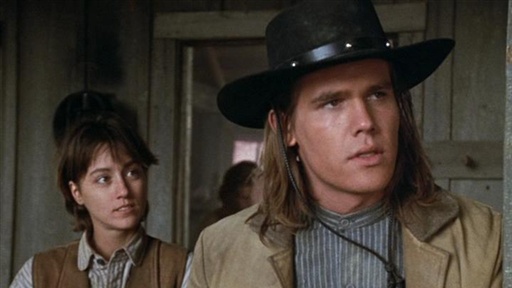
And here’s another thing: Already in the first episode, the writers set up a romantic relationship between The Kid — who was supposed to be the main character, remember? — and the only girl in the bunch, who was pretending to be a boy in order to keep her job. That relationship hit a snag in season 2. However, another of the boys had noticed the same girl, and we got a little bit of a romantic love triangle going. I’ll give you three guesses as to which boy it was, and I won’t hold my breath while you guess.

Jimmy and Lou — that was her name — had a hell of a lot more chemistry than Lou and The Kid ever did, and would probably have been very happy together, but this was where those problems cropped up again. The real James Butler Hickok didn’t get married in 1861, nor was there any way anyone would believe that the character as he was played would have left the girl he loved to scout for the Union army. Yet that was what Wild Bill did during the Civil War. It’s a historical fact. So a relationship that had such potential on screen ended up fizzling out into nothing. Because of inconvenient facts.

Now, I know that most of us don’t write about historical characters with real histories we have to work around, but the same issues can come up in our books, if we give out too much information too soon. Some of us plan out everything about our characters before we even sit down to write, and if we put too much of that information into our books before we have to, we’ve hamstrung our characters. On the other hand, some of us write by the seat of our pants, and just give our characters a background, any background, without much thought to the future. Sometimes, something wonderful might develop in book 3 of a series. But if we’ve already established in book 1 that the character came from elsewhere, the background was different, he/she doesn’t have any cousins, is the wrong age, can’t read... we’ve taken away the opportunity to benefit from whatever wonderful thing it is.

Obviously I’m not saying not to give out the information that’s necessary to develop the character. And part of the fun of watching 18-year-old Jimmy Hickok turn into Wild Bill is knowing what will happen to him later. But in the case of The Young Riders, it also limited what could be done with that particular character, and it can do the same thing to our characters and our books if we don’t watch out.

So that’s my bit of wisdom for the day. I’m off to watch some reruns of Firefly now. Research, you know. For that science fiction romance I might write one day.

And if you have any golden nuggets of knowledge gleaned from TV or movies, feel free to share!

* * *

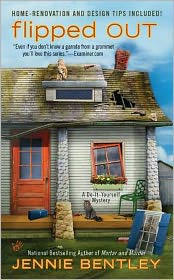
Jennie Bentley/Jenna Bennett writes the Do It Yourself home renovation mysteries for Berkley Prime Crime and the Cutthroat Business mysteries for her own gratification. The 5th DIY mystery, Flipped Out, will be arriving in stores October 4th, while the 4th book in the Cutthroat Business ebook mysteries, Close to Home, was released September 1st. You can find out more about both series at http://www.jennabennett.com/ 

Sunday, July 31, 2011

Spending time with my lover

His name is HP.

And no, it's not short for Harry Potter. Although I love Harry Potter too.

HP is short for Hewlett-Packard. In other words, my computer. And whenever my husband asks me, "are you going to spend time with your lover tonight?" I know I've spent more time then I should cooped up in my office AKA the walk-in closet, making love to HP, and it's time to shut down and take on reality for a change.

The thing is, my whole life is wrapped up in HP. My work is here. Writing is my career, and I do it in front of HP, my fingers caressing the keyboard (to paraphrase my husband).

Everything else I do is also here. Twitter. Facebook. Email. Research. Netflix (yes, that's research too). I read. I pay bills. I balance the bank statement. I blog.

And I can certainly understand why hubby thinks that I like the computer better than I like him. It always gives me what I want, it never argues, and it doesn't feel betrayed when I get up to do something else.

In all seriousness, I have a time management problem. I spend too much time in front of the computer. And it's a problem many of us share. We're sedentary creatures, we writers. Everything we could possibly want is in the box in front of us. With the advent of the internet, we don't even have to leave the desk to do research anymore. With Google Maps, who needs to visit a place to get the feel for it? I've written six books in a series of mysteries set on the coast of Maine, bestselling books... and I've never been to New England.

I'm pretty sure I'll die here, sitting in this chair staring at the screen. They'll have to pry my cold, dead hands from the keyboard. And bury me sitting, since I'll be frozen in this position. Working on my next blog.


# # #


Bente Gallagher AKA Jennie Bentley & Jenna Bennett writes the Do It Yourself home renovation mysteries for Berkley Prime Crime and the Cutthroat Business mysteries for her own gratification. She lives in Nashville with a husband and two boys, a hyperactive dog, a killer parakeet, two African dwarf frogs, two common goldfish, and the love of her life, HP. You can learn more about her doings and undoing on her website.

Monday, May 30, 2011

Lest we forget

by Jenna Bennett

Happy Memorial Day!

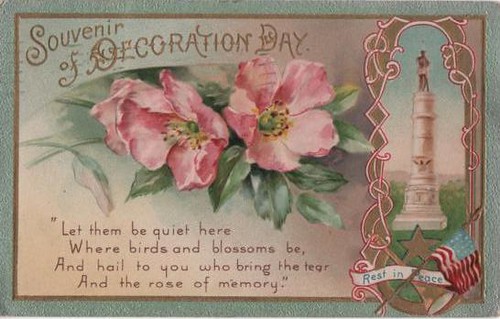
It’s a holiday that started in the South, did you know that? Known back then as Decoration Day, the first commemoration was held in Charleston, South Carolina, in 1865, less than a month after the Civil War ended.

The site of the celebration, at the Washington Race Course, had been used as a temporary Confederate prison camp for captured Union soldiers, as well as a mass grave for those soldiers who died there. Immediately after the cessation of hostilities, freedmen – freed African slaves – exhumed the bodies from the mass grave and reinterred them in individual graves. They built a fence around the graveyard with an entry arch, and declared it a Union cemetery. On May 1, 1865, a crowd of thousands, mainly black residents, proceeded to the location for events that included sermons, singing, and a picnic, thereby creating the first Decoration Day celebration

The practice of decorating soldiers’ graves had become widespread in the North, as well. The first known observance of Decoration Day north of the Mason-Dixon line was in Waterloo, New York, a year later, on May 5, 1866.

In 1868, Decoration Day was made a national holiday, and was observed for the first time on May 30 of that year; a date chosen because it was not the anniversary of a battle. There were events in 183 cemeteries in 27 states that year, and 336 the next. 

At first, Decoration Day was an opportunity for veterans, politicians and ministers to commemorate the glorious sacrifice of their own side as well as recall the atrocities of the enemy. But by the end of the 1870s, the rancor was gone and the speeches praised the soldiers of both sides. The town of Columbus, Mississippi was actually far ahead of the curve in this endeavor: as early as 1866, their celebration commemorated both the Union and Confederate casualties buried in the town cemetery.

On Memorial Day the flag is raised briskly to the top of the staff and then solemnly lowered to the half-staff position, where it remains only until noon. It is then raised to full-staff for the remainder of the day. The half-staff position remembers the more than one million men and women who gave their lives in service of their country. At noon their memory is raised by the living, who resolve not to let their sacrifice be in vain, but to rise up in their stead and continue the fight for liberty and justice for all.

Have a good day, and at 3 PM, please observe the National Moment of Remembrance, and “voluntarily and informally observe in your own way a moment of remembrance and respect, pausing from whatever you are doing for a moment of silence or listening to Taps."


Thursday, August 26, 2010

Where the heart is

I’ve been lucky enough in my life to live in several beautiful places. I grew up in Norway, which is considered one of the loveliest places in the world. Mountains, forests, fairytale landscapes with rocks and rivers—not to mention the coast, long enough to reach from Mexico to Canada and beyond.


From Norway I went to New York City, which may not have the reputation of being particularly lovely, but to someone who adores it, it has a beauty all its own. The skyline all lit up at night, the bustle of the streets, the people: all different shapes, sizes, and colors, in their different clothes. The different neighborhoods, with their different personalities. Rockefeller Center at Christmas, with the tree and the skaters.

My last stop so far has been Nashville, which is different again. There’s the Parthenon, of course, and the Country Music Hall of Fame. The Ryman Auditorium, the Opryland Hotel, the Belle Meade and Belmont Plantations... To me, the beauty of Nashville is all about buildings. And not buildings plural, like New York’s skyline. Buildings singular, one at a time. Gorgeous Victorian cottages, rambling Arts and Crafts bungalows, quaint fairytale Tudors with towers and points...

We’re talking about moving again, this time to Saint Augustine, Florida. The oldest town in the United States, settled in 1565 by Pedro Menendez de Aviles. Gorgeous little town with narrow cobblestoned streets, old French Quarter-style buildings made of coquina shell mixture, a fort guarding the harbor, and of course the beautiful Anastasia Island beach, with white sands and azure water. Dolphins breaking the surface on the intracoastal waterway, slow manatees bobbing, graceful sailing boat and—yes—some rather attractively muscled people in skimpy clothes.
Where I am is a big deal to me. What I see around me, what the place smells like, sounds like, feels like. How hot or cold it is. Each place is different, distinctive.

And it’s the same when I write. The setting becomes almost like a character in the book. Distinctive and different. And like the characters, it drives the plot forward. The fact that Waterfield is on the coast of Maine has influenced the kinds of stories I include in the DIY-series; there are subjects I just wouldn’t have been able to tackle had the books been set elsewhere. Smuggling, human trafficking, the US Navy, Marie Antoinette’s cats...

Same thing with A Cutthroat Business. Savannah Martin is who she is because of where she grew up; setting very literally influenced the character, and setting continues to influence the plot and background in that book, and in the ones that will follow. It’s all about the Southern setting, Southern mores, a Southern background.

It probably goes without saying that I also enjoy reading books with a distinctive setting, be it domestic or foreign, real or imagined. Elizabeth Peters’s Egypt in the last century. JD Robb’s New York City anno 2060. Lois McMaster Bujold’s planet of Barrayar. JK Rowling’s Hogwarts. Deborah Crombie’s London and Carla Neggers’s Boston. Julia Spencer-Fleming’s Miller’s Kill. Frank Baum's Land of Oz.

So what about you? Is setting important to you when you read? Do you have any favorite authors whose settings you enjoy? Have you ever read a book specifically because it was set in a certain place? (I have to confess to gobbling up books set in Cornwall. Comes from growing up on Daphne de Maurier, I expect.)

And how about when you write, if you write? Is setting important to you then, or can your books be set practically anywhere and not change appreciably because of it?

Inquiring minds want to know.


Bente Gallagher is the author of A Cutthroat Business, first in the Savannah Martin real estate mysteries (June 2010) and the Do-It-Yourself home renovation mysteries (three strong; DIY-4, Mortar and Murder, coming to a store near you on January 4th, 2011) written as Jennie Bentley. You can read more about her doings and undoings on her website: www.bentegallagher.com

Tuesday, June 29, 2010

When the Mosquitoes and Vampires Start Biting…

One of these days I'll get around to actually writing my own blog post again, I promise, but 'tis the season for debut authors, and I've got another treat for you today. Please put your hands together and welcome my friend, fellow ITW debut buddy, Southern Author, and acolyte of our very own Carolyn Haines, the marvelous Jeannie Holmes, whose first book, Blood Law, is scheduled to arrive at a store near you any day now. You can check out an excerpt HERE; you won't be sorry.

Without further ado... here's Jeannie:

I’d like to thank all the regulars here at A Good Blog Is Hard to Find for giving me a guest blog this week, especially Jennie Bentley who gave me a topic when my mind went on strike and refused to consider any form of work. I also want to give a big shout-out to my former teacher and current good friend, Carolyn Haines. Everything I learned about writing I learned from her. Hmm…should I really be saying that aloud? (Just joking. Carolyn knows I love her.)

When Jennie first approached me about blogging my debut novel, Blood Law, on a Southern writers' blog, I thought, “I can do this. I’m from Mississippi, and I live in Alabama. The book is set in Mississippi. No problem.” That’s what I continued to think until my brain decided to take an unannounced mid-week vacation last week. So when Jennie reminded me that I still needed to turn in a blog, I admitted I’d drawn a blank. She was nice enough to offer a topical setting question: Why are so many vampire books set in the South? Ah! Now we’re getting somewhere.

The short answer to this question is “I don’t know.” Honestly, I don’t know why or how vampires came to populate the South, but I believe it started with Anne Rice’s Interview with the Vampire. If you’ve ever walked the streets of New Orleans’s French Quarter, with its narrow alleys and brick-paved streets, it’s easy to image Louis and Lestat hunting the residents after the sun goes down. Conversely, if you’ve ever spent time in one of the many small towns that dot the rural landscape of Louisiana, Mississippi, or Alabama, it’s equally easy to imagine the likes of Bill Compton or Eric Northman taking an interest in a local telepathic barmaid, such as Charlaine Harris’s Sookie Stackhouse.

However, this doesn’t answer the question of why so many vampire books are set in the South. Well, I can’t speak for other authors, but I know why my debut novel, Blood Law, is set in small-town Mississippi. It boils down to writing what you know, and I know small-town Mississippi life and have been intrigued by vampires since my dad first allowed me to watch Bela Lugosi as Dracula when I was six. (My mother wasn’t very happy with him for about a week or so afterwards because she was the one who had to deal with my nightmares.) I’ve also had a life-long admiration for law enforcement so I combined all of these into a book and the result is vampire cops tracking a killer through the streets of a small Mississippi town. Ta da!

My personal reasons aside, what is it about the South that makes it fertile ground for vampires? I think it’s because the past is still very much a part of the present here. As my grandmother would say, “Even the ghosts have long memories,” meaning there are reminders of the past all around us. Whether it’s the antebellum mansions of Natchez, the Spanish moss-laden oaks of Mobile, or the wrought-iron balconies of New Orleans’s French Quarter, history is alive in the South. Vampires, especially the modern anti-hero variety, are walking remnants of that past and to place them in an ultra-modern setting seems almost a disservice. They are creatures of other places and other times, and as my Los Angeles-raised husband will tell anyone, “The South is a world unto itself where time slows to a crawl…at least until the mosquitoes start biting and then it’s every man for himself.”

###

Author Bio:
Jeannie Holmes is a Mississippi native who now lives in Mobile, Alabama with her husband, four neurotic cats, and an arthritic shaggy dog. Blood Law is her first novel.

If you'd like to hear more from Jeannie, she's also over on the Working Stiffs today. Yeah, I've been very bad about writing blog posts lately. Although you can catch me all week on 7 Criminal Minds, if you want.

Monday, March 1, 2010

Diff'rent Strokes

by Bente Gallagher

Last spring, I spent a weekend in Bowling Green, KY, at the Southern Kentucky Book Fest. (Nice little event, if you’re in the area. This year, it takes place on Saturday, April 17th at the Carroll Knicely Conference Center, which is hooked up to the Western Kentucky University campus . Yes, I’ll be there again. Discussing “Lovely Little Mysteries” with Jane Cleland, Laura Bradford and Beverle Graves Myers. 12 o’clock sharp. In case you’re in the neighborhood...)

Back to last year’s event. I can’t remember the topic of the panel I was on then (it’s a few events ago now) but I do remember at one point talking about how each of us found representation. Whether that was the point of the panel, or whether we were just answering a question from the audience, I’m not sure, but I do remember being there and discussing it.

There were five of us, all writing different aspects of crime fiction, from fluffy super-cozy mysteries (mine) to dark and disturbing psychological thrillers, and everything in between. There were even zombies. Our stories of how we found our agents turned out to be just as different.

Honestly, I thought most of the others would have done the same thing I did: I cold queried agents whose names I found online until one of them bit and offered to represent me. There was nothing magical or ordained about it. It took about four months and about forty queries, which I sent out in batches of five. Basically, I did it the old-fashioned way.

Turned out I was wrong. There was someone who got the editor first, and ended up signing with an agent the editor recommended. There was someone who pitched an agent at a writing conference and ended up getting signed. There was one guy who sat next to an agent on a plane and got to talking with him, and ended up being represented that way.

My favorite, though, was J.T. Ellison’s story: she got herself a membership to Publishers Marketplace ($20 a month; well worth it!). She posted excerpts from her work in progress on her page, she checked the little box that said ‘looking for representation’... and she had her dream-agent approach her, asking to represent her!

That’s nice work if you can get it.

Another friend and sort-of critique partner drove me insane with her dithering last year. She kept polishing her manuscript, kept tinkering with it, kept writing and rewriting her query letter, kept going over it and over it and over it until I wanted to strangle her. Couldn’t she just get the damn thing out there? I mean, it isn’t a matter of life and death, you know? It may feel that way, but it really isn’t.

Anyway, after several months of getting on my last nerve, she finally decided she was ready, and emailed queries to her top ten agents one Monday morning. By Friday, she had six requests for full manuscripts and the next week, there were two offers of representation in her email.

That’s nice work if you can get it, too.

The thing is, there isn’t one right way to find an agent, just like there isn’t one right way to write. You can give five authors the same sentence, or the same premise, and tell them to build a story around it, and you’re gonna get five different stories.

And that’s fine. It would be pretty boring if everyone did everything the same way, wouldn’t it?

Bottom line, I guess, is that if you’re looking for representation, leave no stone unturned. Open yourself up to possibilities. Don’t be too proud to cold query, and don’t forget to do your homework first, even if it drives the people around you crazy. Go to conferences and meet the agents. Talk to the person next to you on the plane. And subscribe to Publishers Marketplace. It’s well worth the price tag. Even if you don’t get an agent out of the deal, you’ll get a whole lot of other helpful information. If you keep at it, sooner or later the stars will align and you’ll be in the right place at the right time: your baby (AKA manuscript) will get in front of the right agent, who’ll agree to be yours. And then that’ll be one hurdle jumped, and you’ll have to worry about the next one: whether your agent can find an editor who loves your book as much as the two of you do.

No, there are no guarantees that having an agent will get your book published. It helps, but it’s not a certainly. But no one ever told you getting published would be easy, did they? Or if they did, you have my permission to kick them where it hurts most.

Before I sign off, let me make a pitch for my new book, PLASTER AND POISON, third in the Do-It-Yourself Home Renovation mysteries from Berkley Prime Crime. It’ll be officially released tomorrow, and available in a store near you. If you’re in the Nashville area, stop by one of my signings: I’ll be at the lovely Mysteries & More in Lennox Village on Saturday, March 6th, from 2 to 4 PM, and later that evening, I’ll be at Sherlock’s Books on Fifth Avenue in downtown Nashville for the Art Crawl from 6 to 9 PM. With—as it happens—the brilliant J.T. Ellison, who’s signing THE COLD ROOM, fourth book in the Taylor Jackson series.

Be there, or be square!

Monday, January 4, 2010

New Years Greetings from the Newbie

by Bente Gallagher

When I was given my assignment for this – my first blog for the Southern Authors – I wasn’t quite sure what to think. The future of publishing? How I took my writing to the next level...?

The thing is, I’ve been published for precisely a year and two months today. My first book, called FATAL FIXER-UPPER – it’s one of those cutesy hobby-mysteries, about a designer-turned-renovator in a small town in Maine – was released on November 4th, 2008. Exactly a year and two months ago. Book 2, SPACKLED AND SPOOKED, came last August, and I’m currently gearing up for book 3, PLASTER AND POISON, which is due to hit stores in March. I’ve finished writing book 4, and I’m keeping my fingers crossed that the wheels of publishing keep turning for long enough that I can see it hit stores in late 2010. In the meantime, I’m looking forward to the publication of the first book in another series, A CUTTHROAT BUSINESS, in June 2010.

Sounds good, but really and truly, getting published at all is the only level I’ve attained thus far. I’m sure my writing must be getting better—usually that happens when you do something a lot; you get better at it—but I can’t say I think about that a whole lot. I’m too busy cranking out words as quickly as I can.

I wouldn’t mind taking my career to the next level, though, although I guess it would help if I knew what that meant. Is it more money? More books sold? My name in bigger letters? Moving from mass market paperback to hardcover? Hitting the New York Times bestseller list? Being featured on Oprah? Is that how you know you’ve arrived?

Or maybe you don’t ever know you’ve arrived.

I had occasion, last year sometime, to meet the wonderful Carolyn Haines (Hi, sweetie!) who should need no further introduction. She came to speak at our local Sisters in Crime meeting in Nashville, and we had dinner together afterwards, a group of us, and if she lived closer, I swear I’d be bugging her all the time, because she’s just great fun and I had a marvelous time hanging out with her. Of course, what I did to repay the kindness, was to beg the poor woman to read my ARC and – if she liked it – to blurb my new book.

Just goes to show that a good deed never goes unpunished.

Carolyn, being a class act all the way, agreed. And I appreciate it. The funny thing was when she told me she wished she could get one of the big names to endorse her. Which struck me as hilarious, since I wanted her to endorse me because she is a big name...

This is the first blog of the year, so I guess maybe it’s appropriate to do those dreaded New Year’s resolutions. What I’m going to do to take my writing to the next level in 2010.

Here are my resolutions; feel free to chime in with your own:

1. I’m going to finish the last book on my contract, and make it the best book it can be.


2. I’m going to write another book as well, one that isn’t under contract, and make that the best book it can be, too. And then I’m going to pray that my agent can sell it.


3. I’m going to attend three writers conferences in my own neck of the woods. (No, that’s not actually a resolution. I’m already signed up for those.)


4. I’m going to attend one writers conference somewhere else, and while I’m there, I’m going to pretend to be out of myself, and I’m going to meet someone I haven’t met before and make a new friend and learn something I didn’t already know.

5. I’m going to attend at least one association meeting every month, and actually get involved in each of the associations I’m a member of.

6. And because writing is one of those professions where you can easily spend fifteen hours a day sitting on your spreading butt in front of the computer—at least I can—I’m going to stand up and exercise at least every other day. Mens sana en corpore sano, and all that.

So that’s it for me. Feel free to tell me what your New Years resolutions are going to be this year, or give me some ideas for how you’re planning to take your writing to the next level in 2010. Or suggestions for how I can do the same for mine. And if you have some insight into the future of publishing, I wouldn’t mind if you wanted to share that with me, as well.

Happy New Year!


Bente Gallagher writes the Do-It-Yourself Home Renovation mysteries for Berkley Prime Crime under the pseudonym Jennie Bentley, and—starting in June 2010—the Savannah Martin Real Estate mysteries as herself. She lives in a historic neighborhood in Nashville with two boys, a hyperactive dog, a parakeet, two goldfish and two African dwarf frogs, plus her husband the Realtor®.

You can find her at http://www.bentegallagher.com/ or http://www.jenniebentley.com/ (they’re one and the same) or at http://www.happy2sellnashville.com/, if you’re in the market to look at real estate.